Ditch the Morning Guilt Trip: How to Finally Eat Breakfast Without Beating Yourself Up
You pour yourself a bowl of cereal, maybe splash in some milk, and before the first spoonful even hits your lips, a little voice pipes up. Is this the right kind of cereal? Isn't this basically just sugar? Shouldn't I be having eggs? Or maybe I shouldn't be eating at all right now?
If that sounds familiar, you are absolutely not alone. Breakfast — the meal that's supposed to be comforting, grounding, the warm start to a new day — has somehow become one of the most emotionally loaded moments in a lot of Americans' lives. And the weird part? It doesn't have to be.
How Did Morning Eating Get So Complicated?
It wasn't always like this. For most of American history, breakfast was just... breakfast. You ate what was available, you sat down, and you got on with your day. Oatmeal, eggs, biscuits, toast — nobody was running a macro count on their grits.
Somewhere along the way, though, diet culture moved in and made itself at home at the kitchen table. The low-fat craze of the '80s and '90s demonized buttered toast. Atkins came along and turned orange juice into the enemy. Then intermittent fasting told everyone to skip breakfast entirely, and suddenly the very act of eating in the morning felt like a moral decision.
"We've attached so much virtue to food choices that people genuinely feel like they've failed before 9 a.m.," says registered dietitian Maya Okonkwo, who works with clients in Chicago. "Breakfast is supposed to be nourishing. Instead, for a lot of people, it's become the first test of the day — and they feel like they're already failing it."
The Social Media Breakfast Bar Is Set Impossibly High
Diet culture laid the groundwork, but social media built the whole house. Scroll through Instagram or TikTok on any given morning and you'll run into a parade of aesthetically perfect smoothie bowls topped with geometric fruit arrangements, golden-hour avocado toast that looks like it took thirty minutes to plate, and "what I eat in a morning" videos from fitness influencers whose kitchens appear to have never seen a rushed Tuesday.
None of that is inherently bad. But when your actual morning looks like reheated coffee and a slightly stale English muffin eaten standing over the sink, the comparison hits hard.
Food psychologist Dr. Renata Souza, based in Austin, Texas, calls this "aspirational eating shame" — the gap between the breakfast you think you should be having and the one you're actually having. "Social media has created this very narrow picture of what a 'good' breakfast looks like," she explains. "And when people can't match that image, they internalize it as a personal failure rather than recognizing that the image itself is unrealistic."
The result? People either overcorrect — spending money and mental energy chasing the perfect morning routine — or they give up entirely, skipping breakfast and telling themselves they're "not a breakfast person" when really, they just got tired of feeling judged.
Your Body Doesn't Know What Instagram Looks Like
Here's something worth sitting with: your body genuinely does not care whether your breakfast was photogenic. It cares whether it got fuel.
Okonkwo points out that the nutritional differences between a "perfect" breakfast and a "imperfect" one are often far smaller than diet culture suggests. "Pancakes with syrup on a Tuesday morning are not going to derail your health. A bowl of cereal is not a character flaw. These are foods that give your body energy and, maybe more importantly, give your brain a moment of comfort and pleasure — and that matters."
Research consistently shows that eating breakfast — in almost any reasonable form — is associated with better concentration, more stable mood, and lower likelihood of overeating later in the day. The content of that breakfast matters far less than the relentless online discourse would have you believe.
The Quiet Revolution Happening at Kitchen Tables Across America
Something is shifting, though. Slowly, but noticeably.
More and more people are pushing back against the idea that breakfast needs to be optimized. There's a growing movement — call it breakfast acceptance, or intuitive morning eating, or just plain common sense — that centers on eating what actually sounds good, what's actually available, and what actually makes you feel okay about facing the day.
Dr. Souza sees it in her practice. "I have clients who come in convinced they need a complete breakfast overhaul, and what they actually need is permission to enjoy what they already like eating. That permission is doing more for their relationship with food than any meal plan ever did."
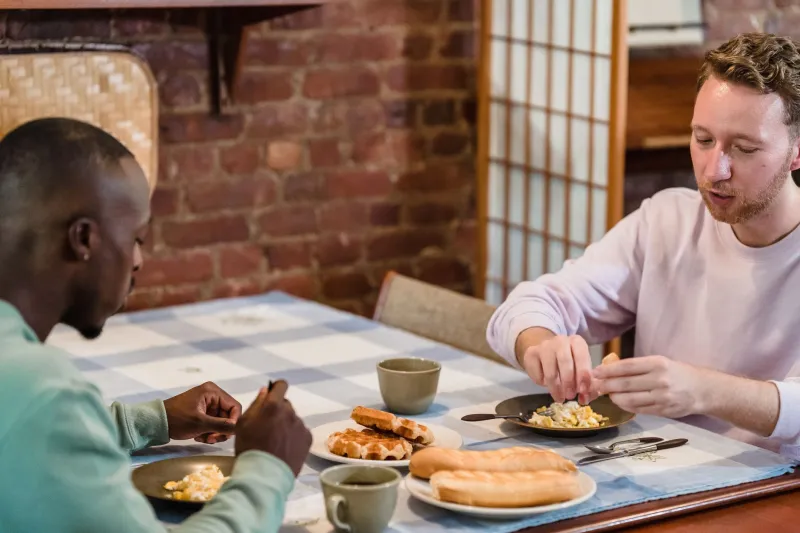
That tracks with what we hear at YiHop constantly — people aren't looking for a lecture at the breakfast table. They're looking for a plate that feels like home. The scrambled eggs that taste like the ones their mom made. The pancakes that make a slow Saturday feel like a gift. The simple bowl of oatmeal with too much brown sugar that just works.
Practical Ways to Quiet the Inner Breakfast Critic
If you're ready to stop arguing with yourself every morning, here are a few things that actually help:
Name the voice, then ignore it. When the guilt creeps in, try recognizing it as external noise — a diet ad, a social media post, an old magazine headline — rather than your own genuine instinct. You're not weak for wanting toast. You've just been marketed to very aggressively.
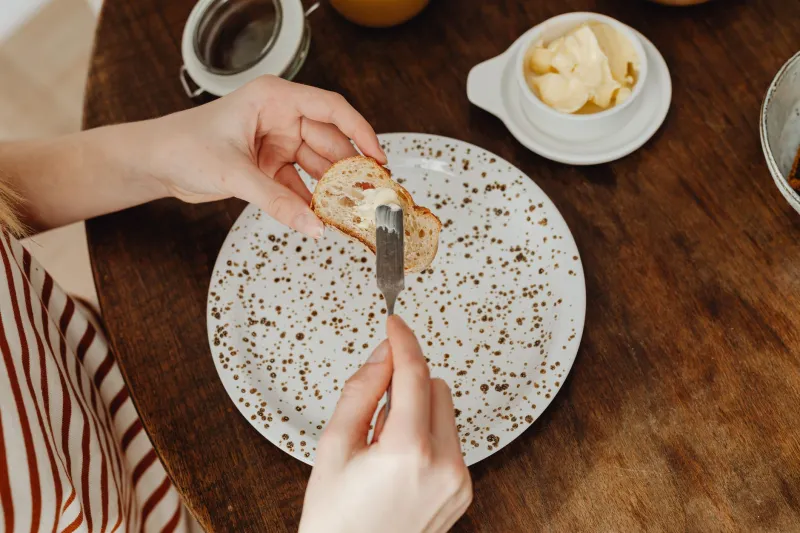
Eat what you actually want, not what you think you should want. If a plate of scrambled eggs and buttered sourdough sounds good, that's a fine breakfast. If a bowl of cereal is what gets you to the table, that's a fine breakfast too. The best breakfast is the one you'll actually eat.
Give yourself a time limit on the decision. Decision fatigue is real, and agonizing over breakfast choices can drain mental energy you need for actual life. Pick something, make it, eat it. Done.
Step away from the comparison scroll. If your morning Instagram habit is making you feel bad about your breakfast before you've even finished it, that's worth examining. Influencer breakfast content is produced content. It's not a standard.
Bring back the table. There's something about sitting down — even for ten minutes, even at a kitchen counter — that shifts breakfast from a transaction into a moment. That shift alone can change how the whole meal feels.
Morning Should Feel Like a Welcome, Not a Test
At its best, breakfast is an act of care. It's the first thing you do for yourself each day. And the idea that it should come loaded with judgment, shame, or a side of self-criticism is, honestly, exhausting.
You deserve a morning that feels good. Not Instagram-good. Not nutritionally optimized according to whoever is currently trending. Just genuinely, quietly, comfortably good — the kind of good that comes from sitting down with something warm and familiar and letting the day begin on your own terms.
That's what breakfast is supposed to be. And it's absolutely within reach, no matter what's on your plate.