Two Breakfasts, One Country: The Widening Gap Between Who Gets to Start the Day Right
On a Tuesday morning in Nashville, two people are eating breakfast.
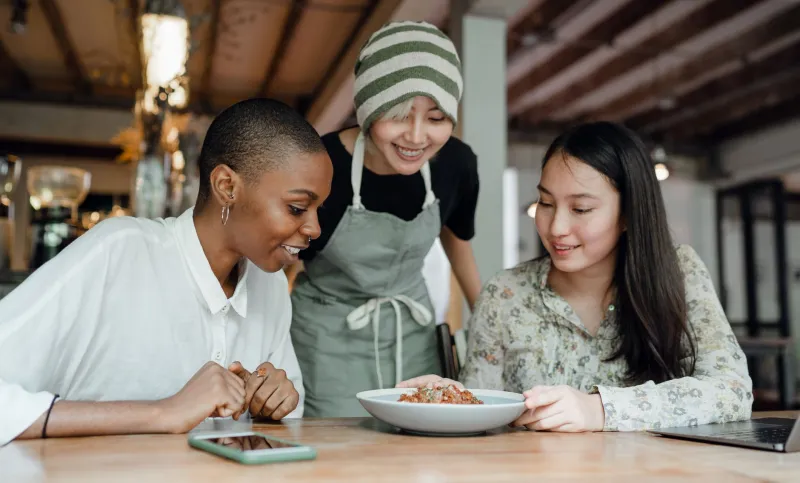
One of them is at a farm-to-table café in East Nashville, paying $18 for a heritage grain frittata with house-pickled vegetables and single-origin pour-over coffee. She works remotely, started her day at 9 a.m., and has been here before.
The other is in a gas station two miles away, eating a shrink-wrapped breakfast sandwich that's been sitting under a heat lamp since 5:30. He started his shift at 6. He has about four minutes to eat it.
Same city. Same morning. Completely different breakfasts — and everything that comes with them.
The Breakfast You Eat Is Not Really a Choice
American food culture loves to talk about breakfast as a matter of personal preference. Do you prefer avocado toast or a classic diner plate? Smoothie bowl or buttermilk pancakes? But beneath the lifestyle framing lies a more uncomfortable truth: for a significant portion of Americans, breakfast isn't really a choice at all. It's a function of time, income, geography, and the kind of work you do.
According to USDA data, roughly 1 in 8 American households experiences food insecurity at some point during the year. Breakfast — the meal most associated with energy, cognitive function, and daily stability — is often the first thing that gets skipped or compromised when budgets are tight.
But food insecurity is only part of the story. There's a broader, quieter form of breakfast inequality that affects many more people: the inability to access not just food, but the experience of a good morning meal. The sit-down. The warmth. The feeling of being taken care of.
Time Is the Invisible Ingredient
If you ask nutritionists what separates a nourishing breakfast from a survival breakfast, they'll often give you a list of ingredients. But ask people who work early shifts, multiple jobs, or hourly positions, and they'll give you a different answer: time.
A farm-to-table omelet doesn't just cost more money. It costs 45 minutes you might not have. It costs the flexibility of a job that doesn't dock your pay if you're five minutes late. It costs proximity to a neighborhood where that kind of café exists.
The average American spends about 13 minutes eating breakfast, according to Bureau of Labor Statistics time-use surveys. But that average masks enormous variation. Salaried professionals with flexible schedules spend considerably more time on morning meals than hourly workers, parents of young children, or people with long commutes.
"Breakfast is a privilege of pace," as one food equity researcher put it. When you don't control your morning, you don't really control your breakfast.
The Geography of the Morning Meal
Where you live shapes what's available to you before 9 a.m. in ways that are easy to overlook if you've always lived somewhere with options.
In many rural counties across the South and Midwest, the choices within a reasonable drive might be a gas station, a fast food drive-through, and a diner that opens at 7. In food-insecure urban neighborhoods — what researchers sometimes call "breakfast deserts" — corner stores and dollar menus often fill the gap left by absent grocery stores and full-service restaurants.
Meanwhile, in wealthier urban and suburban ZIP codes, the breakfast landscape has exploded. Specialty coffee shops, brunch-forward restaurants, meal kit delivery services, and high-end grocery stores offering prepared breakfast items have made the morning meal into an entire lifestyle category. Spending on breakfast out-of-home has grown significantly among higher-income households over the past decade, even as lower-income households have seen their breakfast budgets stagnate or shrink.
Regional identity also plays a role. In parts of Appalachia and the rural South, a full biscuit-and-gravy breakfast remains a deeply affordable, culturally embedded tradition — one of the places where working-class comfort food and genuine nourishment still intersect accessibly. In coastal cities, that same cultural function has been priced out of reach as rents rise and neighborhood demographics shift.
Generational Shifts and the New Breakfast Economy
Millennials and Gen Z have complicated the breakfast picture in interesting ways. On one hand, younger Americans have driven the premiumization of breakfast — the cold brew boom, the acai bowl, the $14 avocado toast that became a cultural flashpoint. On the other, younger generations are also more likely to skip breakfast entirely, often citing cost and time constraints.
There's a split within the generation itself that maps pretty cleanly onto income. College-educated millennials with professional jobs have largely embraced elevated breakfast culture. Their peers without college degrees, working in service, logistics, healthcare, or construction, are often eating the same gas station breakfast their parents ate — or skipping the meal altogether.
This divergence has real consequences. Nutrition research consistently links regular, quality breakfast consumption with better cognitive performance, lower rates of obesity, and improved long-term health outcomes. The breakfast gap isn't just cultural. It compounds over time.
The People Closing the Gap
Here's the part of the story that doesn't get told enough: across the country, individuals, nonprofits, and community organizations are doing remarkable work to make a good breakfast accessible to more people.
Programs like community breakfast clubs at public libraries, church-run morning meal services, and school breakfast programs extended to adults have quietly become anchors in their neighborhoods. Food banks have increasingly prioritized breakfast staples — eggs, bread, oatmeal, peanut butter — recognizing that the morning meal is where many families feel the pinch most sharply.
Some restaurants have built community access into their model. Pay-what-you-can breakfast spots have emerged in cities like Denver, Portland, and Philadelphia, offering full meals with dignity intact — no separate menu, no visible charity, just a suggested price and a real plate of food.
And then there are the home cooks — the grandmothers, the parents, the neighbors — who have always known how to make something nourishing and deeply comforting out of very little. A pot of grits. A pan of biscuits. Eggs scrambled soft with whatever's in the fridge. The breakfast that says you matter enough to feed well, regardless of what's in the bank account.
What a Good Morning Is Really Worth
At YiHop, our whole thing is that every morning should feel like home. It's a simple idea, but sitting with the reality of breakfast inequality makes it feel both more important and more complicated.
Because "home" in the morning — the warmth, the nourishment, the unhurried moment of being fed — isn't something everyone gets automatically. For a lot of Americans, it's something they have to fight for, budget for, or go without.
That's worth paying attention to. Not just as a food issue, but as a question of what kind of country we want to be — and who we think deserves a good morning.