Slow Down, Fork Up: Why Americans Are Turning Their Backs on the Drive-Thru and Coming Home to Breakfast
There's a particular kind of sadness to eating a breakfast sandwich in a parking lot before 8 a.m. — the paper wrapper, the half-melted cheese, the coffee that's somehow both scalding and disappointing. Millions of Americans have done it. Many did it every single weekday for years. And quietly, one by one, a lot of them are deciding they're done.
Call it the breakfast revenge. After decades of optimizing the morning meal for speed and convenience above everything else, something is pushing back. People are sleeping a little earlier so they can wake up with breathing room. They're cracking eggs on Sunday nights just to practice. They're buying cast iron pans and actually using them. The drive-thru isn't disappearing, but the cultural grip it had on American mornings? That's loosening — and the reasons why are more interesting than you might expect.
How We Got Here: The Rise of the Grab-and-Go Morning
The American relationship with fast breakfast didn't happen overnight. It was a slow drift that tracked neatly alongside longer commutes, longer work hours, and a cultural obsession with productivity that turned even eating into something you were supposed to multitask your way through.
By the early 2000s, fast food chains had fully leaned in. Drive-thru breakfast hours expanded. Portable sandwiches got engineered for one-handed consumption. Coffee chains started offering "meal deals" that bundled a drink with something wrapped in foil. The message was clear: your morning is busy, we get it, let us handle this. And for a while, that felt like freedom.
But somewhere along the way, convenience started feeling less like freedom and more like surrender.
"There's a difference between choosing convenience and defaulting to it," says Dr. Mara Ellison, a food sociologist who studies American eating habits. "For a lot of people, the drive-thru became less of a choice and more of a reflex. And when something becomes a reflex, you stop noticing how it makes you feel."
How it made people feel, it turns out, was kind of hollow.
The Pandemic Crack in the Window
The COVID-19 pandemic didn't create this trend, but it cracked open the door. When commutes vanished overnight, millions of Americans suddenly had something they hadn't experienced in years: an unscheduled morning. And a lot of them spent it in the kitchen.
Sourdough got all the attention, but the quieter story was breakfast. People learned to make omelets. They figured out why their pancakes were always flat (overmixing — it's almost always overmixing). They discovered that a real cup of coffee, made at home with a little care, tasted nothing like what they'd been drinking in traffic.
More importantly, they remembered what it felt like to sit down and eat without somewhere to be.
When offices reopened and commutes returned, not everyone went back to the old morning routine. Some people restructured their schedules specifically to protect that slow hour. Others started seeking out breakfast spots — real ones, the kind with actual plates and table service — instead of the drive-thru lane.
"We saw a notable shift in what customers were asking for," says James Okafor, a restaurant consultant who works with casual dining brands across the Midwest. "They weren't just hungry. They wanted an experience. They wanted to feel like the morning was theirs."
What People Are Actually Looking For
This is where it gets interesting, because the move away from drive-thru breakfast isn't just about the food. It's about the ritual.
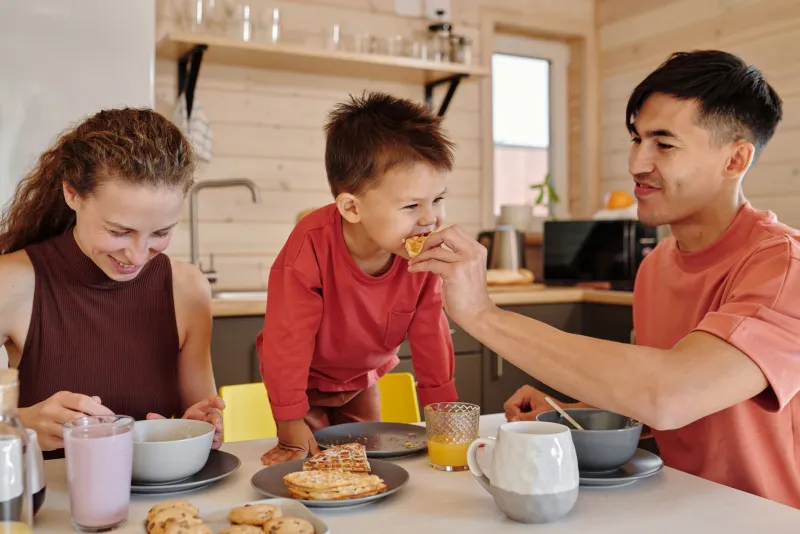
There's something deeply human about a morning meal that has texture and intention to it — a table, a plate, something warm that you made or that someone made for you. Breakfast, more than any other meal, carries emotional weight. It's the meal most closely tied to home, to childhood, to the feeling of being taken care of.
The drive-thru strips all of that out. You get calories and caffeine, but you don't get the moment.
"Breakfast is the one meal where people are still emotionally open," says Dr. Ellison. "You haven't been ground down by the day yet. There's real vulnerability there, and real opportunity for connection — with other people, or even just with yourself. A lot of people are starting to protect that."
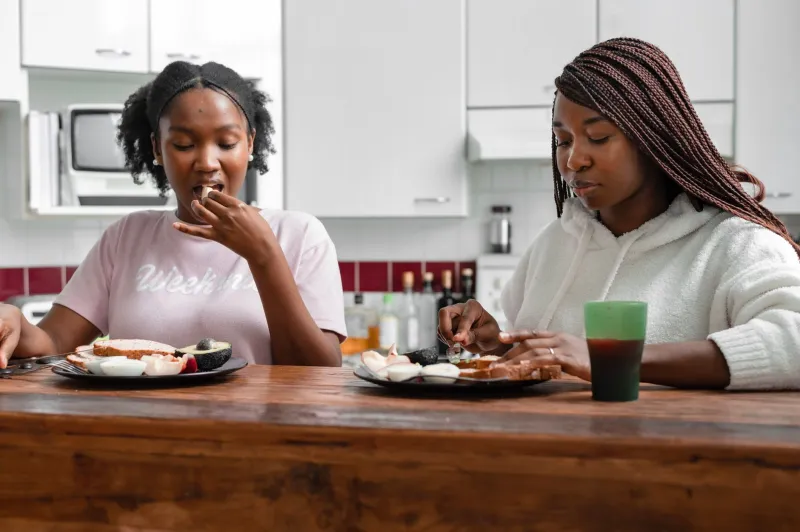
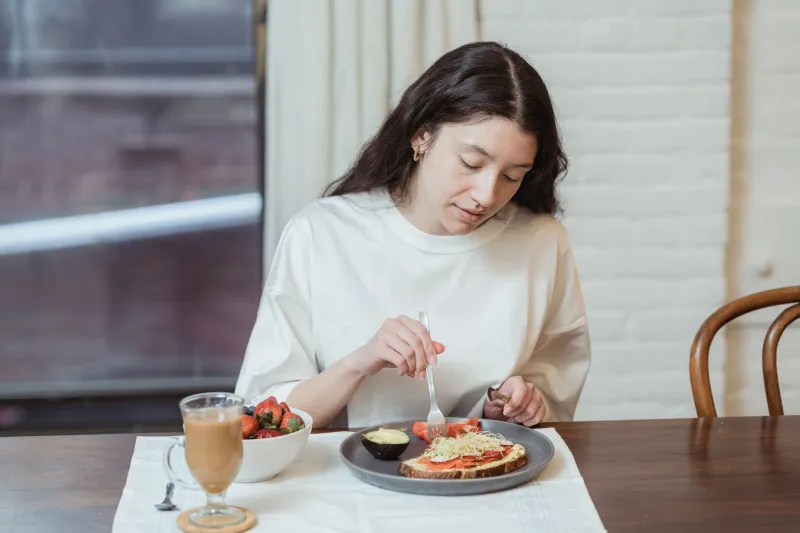
That protection looks different for different people. For some, it means waking up 30 minutes earlier to make something real before heading out. For others, it means choosing a sit-down diner over a drive-thru on the way to work. And for a growing number, it means building a home breakfast routine that feels less like a chore and more like an anchor.
How Restaurants Are Responding
The shift isn't lost on the restaurant industry. Casual breakfast and brunch concepts have been quietly booming, even as fast food breakfast traffic plateaus in some markets. The places doing well tend to share a few things in common: they feel warm, they move at a human pace, and they serve food that tastes like someone actually thought about it.
Interior design in new breakfast concepts reflects this, too. Fewer hard surfaces, more natural light. Counter seating that encourages lingering. Menus that feel personal rather than corporate. The goal isn't to compete with the drive-thru on speed — it's to offer something the drive-thru fundamentally can't.
"People aren't just choosing between fast and slow," Okafor notes. "They're choosing between feeling rushed and feeling welcomed. That's a much easier choice."
At YiHop, that idea is basically the whole philosophy. The morning shouldn't feel like a transaction. It should feel like home — which means it should feel warm, unhurried, and like someone's genuinely glad you showed up.
The Quiet Revolution at the Kitchen Table
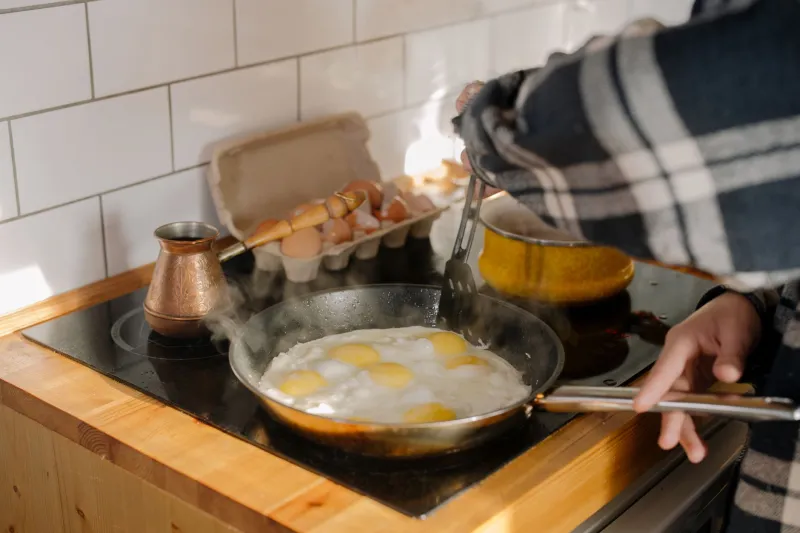
Maybe the most encouraging part of all this is what's happening in home kitchens. Breakfast cooking — real breakfast cooking, not just toasting a frozen waffle — is having a genuine moment. Egg dishes are trending on social media. Breakfast meal prep has become a legitimate weekend activity for young adults who never learned to cook growing up.
People are buying griddles. They're experimenting with different bread for toast. They're learning that a soft scramble and a hard scramble are genuinely different experiences and that one of them is worth the extra 90 seconds.
None of this is about perfection. It's about choosing to show up for your own morning instead of outsourcing it to a speaker box and a sliding window.
The drive-thru will always have a place — some mornings are genuinely chaotic, and there's no shame in that. But the idea that every morning has to be that way? That's the part people are pushing back on. And honestly, it's about time.
Your kitchen is right there. The eggs aren't going to cook themselves. But when they do — when you actually make the time — it turns out morning is a pretty good place to be.