Cold Pizza, Leftover Steak, and Zero Regrets: The People Who Broke Breakfast's Unwritten Rules

Let's get something out of the way: there is no law — federal, state, or municipal — that requires you to eat eggs before 10 AM. No licensing board will revoke your morning credentials if you heat up last night's Thai curry and eat it while the coffee brews. No nutritional governing body has ever officially declared that cereal is breakfast food and spaghetti is not.
And yet.
For most of us, eating "wrong" in the morning comes with a little internal flinch. A small voice that says this is weird. A reflexive glance around the kitchen as if someone might be watching. The rules around breakfast are almost entirely made up — and people are finally starting to act like it.
Where Did These Rules Even Come From?
Breakfast as a distinct category of food is a surprisingly modern invention. For most of human history, people ate whatever was available whenever they woke up — leftovers from the night before, bread, whatever the season offered. The idea that certain foods belong exclusively to morning is largely a product of 19th and 20th century food marketing.
Cereal companies, in particular, did enormous work to define what breakfast "should" look like — light, sweet, grain-based, quick. Egg boards and orange juice lobbies followed with their own messaging. Over decades, these commercial interests calcified into cultural norms so deep that most people don't even think of them as norms. They just think of them as breakfast.
But that conditioning is starting to crack.
The People Who Stopped Asking Permission
Marcus, a high school teacher in Atlanta, eats leftover dinner for breakfast almost every morning. "I make a big batch of something on Sunday — rice and beans, a stew, roasted chicken — and I eat it all week. It's warm, it's filling, it's got protein and fiber. My students think it's insane. I think waking up and making eggs from scratch at 6 AM is insane."
He's not alone. In online communities dedicated to cooking and food culture, threads about non-traditional breakfast choices reliably generate thousands of responses — and almost all of them are enthusiastic. People share photos of morning ramen, cold pizza eaten standing at the counter, bowls of leftover fried rice topped with a fried egg (which, admittedly, edges back toward traditional territory). The tone is celebratory, even a little defiant.
Jamila, a freelance designer in Chicago, started eating ice cream for breakfast on days when she's working from home. "Not every day, but maybe once a week. It genuinely makes me happy. And I've noticed that when I let myself have the thing I actually want, I don't spend the rest of the morning thinking about food."
That last part is worth sitting with. Psychologists who study eating behavior have noted that rigid food rules — even informal, self-imposed ones — can actually increase fixation on forbidden foods. When you tell yourself you can't have the cold pizza, the cold pizza becomes all you think about. When you just... eat the cold pizza, you move on with your day.
Social Media Normalized the Weird Breakfast
A huge part of what's shifted is visibility. Before TikTok and Instagram, your cold-leftover breakfast habit was a private quirk. Now it's content — and it turns out, content that resonates.
Accounts dedicated to "non-traditional breakfast" content have built substantial followings. Videos of people eating miso soup with rice, kimchi fried rice, or a full plate of dinner leftovers first thing in the morning rack up hundreds of thousands of views. The comments are almost universally supportive: this is literally what my family eats, I thought I was the only one, why did I spend years feeling weird about this.
Food influencers who've built audiences around the idea of eating without guilt have found that morning meal content hits differently than anything else. There's something about the permission to eat what you want at the most rule-bound meal of the day that feels genuinely liberating to people.
The Nutritional Case for Not Caring
Here's what registered dietitians will actually tell you, if you ask: the body doesn't know what time it is. It processes a bowl of leftover lentil soup the same way at 7 AM as it does at 7 PM. The nutrients in last night's roasted vegetables don't evaporate overnight. A piece of cold chicken is still protein, regardless of the hour.
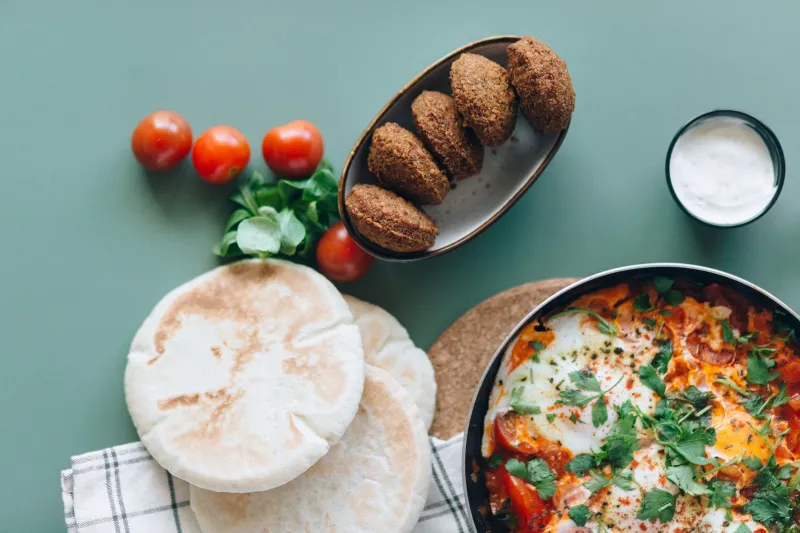
In fact, some of the most nutritionally dense breakfasts you could eat look nothing like a traditional American morning plate. Miso soup with tofu and seaweed. A bowl of beans and rice. Leftover salmon over greens. These are meals that happen to be eaten in the morning — and they're excellent.
The "breakfast foods" that American culture has designated as morning-appropriate are, in many cases, among the least nutritionally interesting options available. Sugary cereal, pastries, white toast — these are the foods the rulebook says are fine before noon. A bowl of yesterday's roasted sweet potato and black beans? Apparently suspicious.
What Breakfast Freedom Actually Feels Like
The people who've made peace with eating whatever they want in the morning describe a similar experience: a small but real sense of lightness. Not having to think about whether something "counts" as breakfast turns out to free up a surprising amount of mental bandwidth.
It also, counterintuitively, often leads to better eating. When you stop treating breakfast as a category with strict membership requirements, you start thinking about it the same way you think about any other meal — what do I have, what sounds good, what will actually keep me going until lunch? Those are useful questions. "Is this a breakfast food?" is not.
At YiHop, we're pretty committed to the idea that morning should feel good — that it should feel like home, like comfort, like yours. And if your version of that is a bowl of cold noodles or a slice of last night's pizza or, yes, a scoop of ice cream on a slow Tuesday, then honestly? That sounds like a pretty great morning to us.