Morning Without Borders: How Global Breakfast Traditions Are Landing on American Tables
For most of American food history, breakfast meant one thing: bacon, eggs, toast, maybe a stack of pancakes if you were feeling ambitious. It was a reliable formula. Comfortable. Predictable. But walk through the right neighborhood in almost any major American city today, and you'll catch the smell of something different drifting out of a kitchen window — cumin and tomatoes, ginger and rice, masa and cheese. The American breakfast table is expanding, and the people doing the expanding are bringing their whole family history with them.
A Morning Meal Is Never Just a Meal
Ask anyone who grew up eating a culturally specific breakfast — whether that's a Filipino silog plate, a Yemeni saltah, or a Colombian arepa con huevo — and they'll tell you the same thing: those flavors aren't just food. They're memory. They're identity. They're the particular way your grandmother's kitchen smelled on a Tuesday.
When immigrant families settle into American life, breakfast is often one of the last things to change. Dinner might adapt. Lunch might get a little more portable. But breakfast? Breakfast tends to hold on.
Sofia Reyes, who moved from Medellín to Miami in her early twenties, says she never once considered swapping her morning arepa for a bagel. "An arepa is fast, it's filling, it's mine," she says. "My neighbors started asking what I was eating, and now two of them make them at home." That kind of quiet, kitchen-counter cultural exchange is happening all over the country — and it's slowly reshaping what Americans consider normal morning food.
The Dishes Making the Biggest Moves
A few global breakfast staples have broken out of their home communities and landed squarely in the American mainstream.
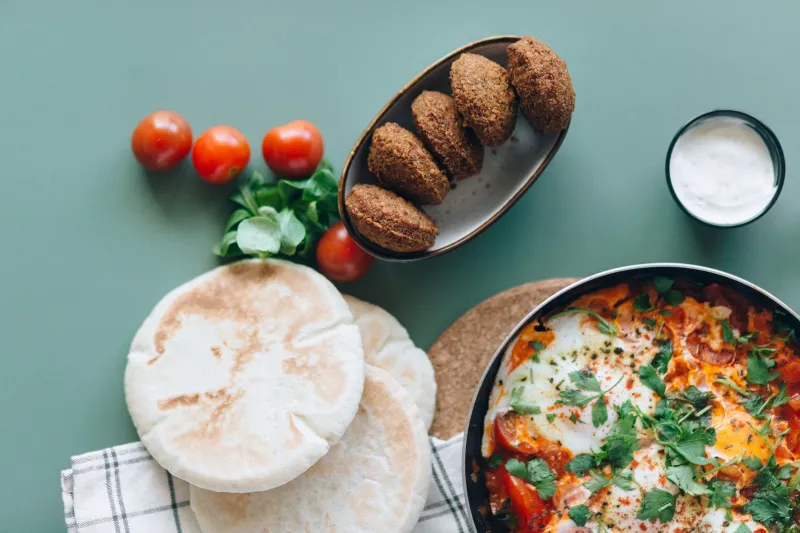
Shakshuka — the North African and Middle Eastern dish of eggs poached in spiced tomato sauce — has arguably had the biggest crossover moment of any imported breakfast in the last decade. It started showing up on brunch menus in New York and Los Angeles around 2015, and it hasn't stopped spreading since. It's easy to make, visually dramatic, and it satisfies that egg-forward instinct that Americans already have. It also happens to be genuinely delicious, which helps.
Congee, the silky rice porridge eaten across much of Asia, is having a similar moment — especially on the coasts. Long a staple in Chinese, Vietnamese, and Korean households, congee is now appearing at trendy breakfast spots that serve it with soft-boiled eggs, pickled vegetables, and chili crisp on the side. It's warm, gentle, and deeply satisfying in a way that feels almost medicinal. For a country increasingly interested in gut health and easy digestion, it makes a lot of sense.
Arepas are making serious inroads in cities with large Venezuelan and Colombian communities — Miami, Houston, New York, Chicago. Crispy on the outside, soft and slightly chewy inside, they're incredibly versatile: stuff them with eggs, black beans, avocado, cheese, or all of the above. They're also naturally gluten-free, which hasn't hurt their appeal.
Ful medames, the Egyptian fava bean stew eaten for breakfast across much of the Middle East, is still more niche — but it's gaining ground in cities like Detroit and Dearborn, where large Arab-American communities have long made it a morning staple. Chefs at local diners in those areas have started offering it alongside traditional American breakfast items, and curious regulars are ordering it.
Restaurants as Cultural Bridges
Independent restaurants have been the real engines of this shift. When a family opens a breakfast spot and puts their heritage on the menu, they're doing something more than running a business — they're introducing their neighbors to a whole new way of starting the day.
Take a place like Makan in Washington, D.C., which serves Malaysian-influenced breakfast dishes to a crowd that's roughly half Malaysian expats and half curious locals who wandered in and never looked back. Or the dozens of Mexican breakfast joints across the Southwest where chilaquiles and huevos rancheros have been on the menu for decades and are now considered just as American as a Denver omelet.
The key is that these restaurants aren't fusion-ing anything. They're not watering down or Americanizing the flavors to make them more palatable. They're presenting the real thing and trusting their customers to meet them there. And increasingly, customers are doing exactly that.
Home Cooks Are Leading the Charge
Social media has accelerated all of this considerably. A single viral video of someone making shakshuka on a Sunday morning can send a million home cooks to the grocery store looking for harissa and crushed tomatoes. TikTok and Instagram have made global breakfast dishes visually accessible in a way that cookbooks never quite could — you can watch someone make congee in real time, pause it, rewind, and have a bowl ready by the time your coffee finishes brewing.
Community cookbooks, neighborhood food festivals, and even school lunch programs in diverse districts are also playing a role. Kids who eat congee or arepas or ful medames at a friend's house start asking for them at home. Parents, curious, look up recipes. The cycle continues.
What This Means for the American Morning
None of this means bacon and eggs are going anywhere. They're not. But the American breakfast table has always been more diverse than its iconic image suggests — it's just that the diversity wasn't always visible or celebrated. What's changing now is that more people are willing to look past the diner menu and ask what their neighbors are eating. And more families are willing to share.
At YiHop, we believe morning is the most personal meal of the day. It's the one you eat before the world gets its hands on you. The fact that more Americans are starting that meal with a dish that carries a whole other country's worth of history and flavor? That feels like something worth celebrating — and worth eating.